Kelvin Gee
Principal Analyst, Marketing Programs & ABM · Forrester Research LinkedIn
Webinar
Key takeaways
- 8:10Forrester research shows less than 1% of MQLs convert into active pipeline, and up to 92% of B2B buying decisions involve at least two buying group members — the lead-centric demand process no longer works.
- 9:13Buying groups are the Goldilocks orientation: marketing automation platforms built around leads are too narrow, while ABM platforms built around accounts are too broad, since one account can contain multiple buying groups evaluating separate opportunities.
- 13:18Account-centric intent data is hard to act on — knowing IBM visited your website tells you little, but knowing which individuals are engaging makes intent immediately actionable.
- 22:32Waiting for account-level intent and engagement scores to rise before outreach means acting too late; contact-level signals let teams reach the right person within the limited window when their interest is strongest.
- 29:44Forrester's adaptive program execution framework (define, deliver, optimize) uses contact-level signals to adjust message, timing and cadence, asset types, and channels per buying group member, and to measure influence at the individual level.
In Kelvin Gee's words
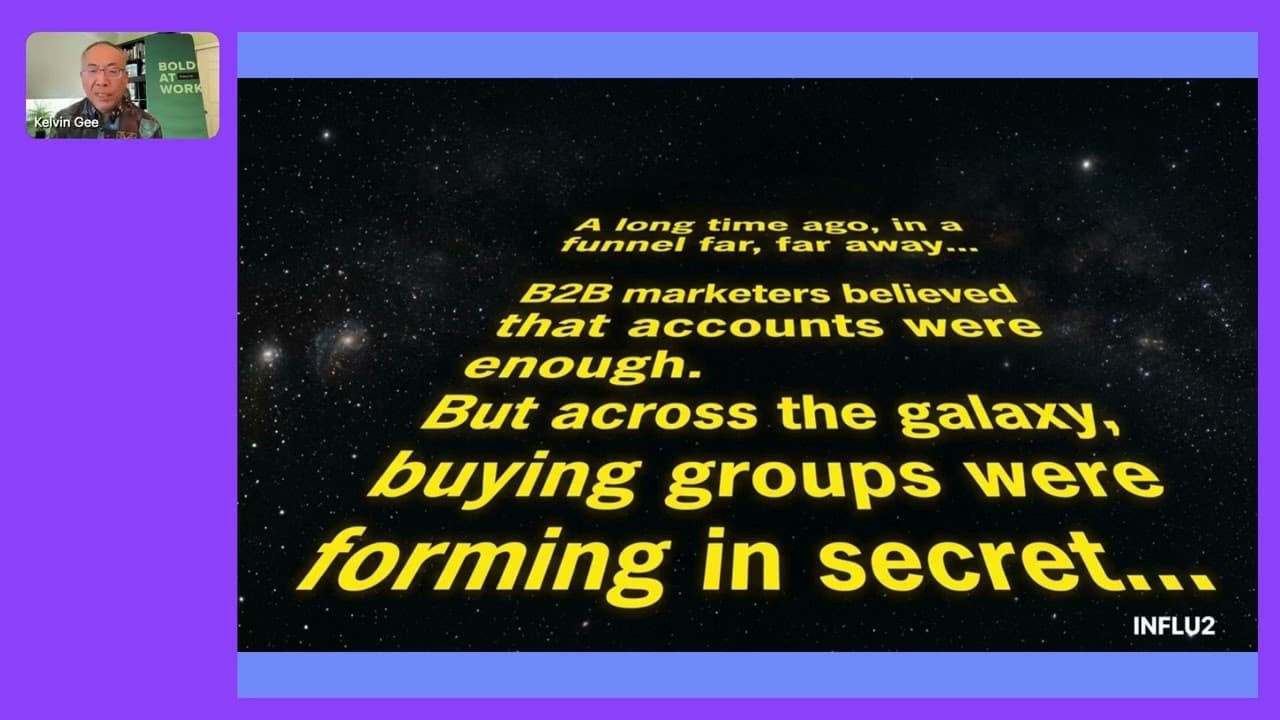
“Star Wars was about the individual people changing the outcome of the entire galaxy. And just like Star Wars, B2B marketing is shifting from targeting accounts to understanding the people, the characters who actually shape a deal.”
“If you just have account-centric intent data, like if you know that IBM's coming to your website, what do you do with that? Whereas if you actually know that Leia, Luke, and Han are actually coming to your website, well, that's actually a lot more actionable.”
“May the right message find the right person.”